
soldering techniques used for printed wiring assembly
Soldering is a fundamental process in printed wiring assembly (PWA) manufacturing, essential for creating reliable electrical connections between components and the printed circuit board (PCB). Various soldering techniques are used to accommodate different component types, board designs, and production requirements, each offering unique advantages and considerations.
One of the most common soldering techniques used in printed wiring assembly is surface mount technology (SMT). In SMT, components with solderable leads or pads are mounted directly onto the surface of the PCB, eliminating the need for holes or through-holes. SMT components are typically soldered onto the PCB using solder paste, which is applied to the component pads before reflow soldering. During reflow soldering, the PCB is heated to a specific temperature, causing the solder paste to melt and form solder joints between the component leads and the PCB pads. SMT offers high component density, precise placement accuracy, and suitability for automated assembly, making it ideal for modern electronics manufacturing.
Another soldering technique commonly used in printed wiring assembly is through-hole soldering. Through-hole components feature leads that are inserted into holes drilled through the PCB and soldered to pads on the opposite side of the board. Through-hole soldering can be done manually using a soldering iron or automated using wave soldering or selective soldering machines. Wave soldering involves passing the bottom side of the PCB over a wave of molten solder, which creates solder joints on the through-hole components. Selective soldering, on the other hand, allows for precise control of soldering parameters and is suitable for assemblies with a mix of through-hole and surface mount components.
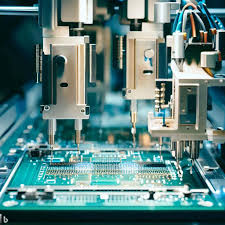
What are the soldering techniques used for printed wiring assembly?
In addition to SMT and through-hole soldering, rework and repair soldering techniques are often employed in printed wiring assembly to correct defects or replace faulty components. Rework soldering involves removing and replacing individual components or solder joints without damaging the surrounding circuitry. Techniques such as hot air rework, soldering irons, and desoldering stations are used to heat and remove solder from joints, allowing components to be replaced or repositioned as needed. Rework soldering requires precision, skill, and attention to detail to ensure that the integrity of the assembly is maintained.
Furthermore, advanced soldering techniques such as laser soldering and vapor phase soldering are gaining popularity in printed wiring assembly manufacturing due to their ability to provide precise, reliable solder joints with minimal thermal stress. Laser soldering utilizes a focused laser beam to melt solder and create joints between components and the PCB. This technique offers high precision, selective heating, and minimal risk of damage to surrounding components. Vapor phase soldering involves immersing the PCB assembly in a vapor of solder paste, which condenses on the surfaces of the components and creates solder joints when heated. Vapor phase soldering is suitable for assemblies with complex geometries and delicate components, as it provides uniform heating and eliminates the risk of overheating.
In conclusion, soldering is a critical process in printed wiring assembly manufacturing, essential for creating reliable electrical connections between components and the PCB. Various soldering techniques, including surface mount technology, through-hole soldering, rework soldering, and advanced techniques such as laser soldering and vapor phase soldering, are used to accommodate different assembly requirements and production scenarios. By understanding the capabilities and considerations of each soldering technique, manufacturers can ensure the quality, reliability, and performance of printed wiring assemblies in a wide range of electronic applications.