
Properties of PCB Boards
The physical properties of your PCB substrates, copper conductors and components are the primary factors that determine the thermal performance of your circuit board. They are also the main factor in determining signal integrity and heat dissipation. Some key thermal properties of a PCB are its rigidity, dispersion, relative permittivity and more.
In order to effectively dissipate heat in a PCB, it is necessary to have low thermal resistance and high thermal conductivity. The latter is an important property that indicates how much heat traverses a material per unit of temperature difference and cross-sectional area. This allows for a more even temperature distribution and better cooling of the hot and cold regions of a circuit board.
For this reason, many designers choose to use alternative PCB materials that offer higher thermal conductivity than FR4. Using different substrate materials that have high thermal conductivity can help reduce the overall thermal resistance of the stackup and improve the cooling capabilities of the circuit board.
Another crucial aspect to consider when selecting a PCB material is its glass transition temperature, or Tg. This is a measure of how fast the material will react to changes in temperature, and it can have a significant impact on the stability and reliability of your circuit board. For example, if a circuit board is exposed to excessive temperature changes it may experience warping or delamination. A high Tg helps prevent these issues and allows for greater mechanical flexibility in your finished product.
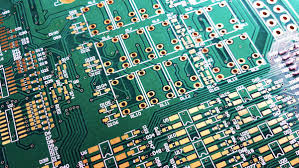
Key Thermal Properties of PCB Boards
A high-quality PCB will also have a good coefficient of thermal expansion, or CTE. This measures how the PCB material will expand and contract as it changes in temperature. It is important to match the CTE of the pcb board material with the CTE of the components used on it. This will help to minimize mechanical stress and avoid failure of the components due to fatigue from repeated thermal cycles.
Lastly, the PCB will have a number of thermal vias. These are holes that allow you to directly connect a copper plane or conductor with the board’s surface. Thermal vias are an effective way to dissipate heat in a circuit board, and they can be used to cool high-powered active components or to remove heat from low-power devices.
Lastly, a pcb board must include components such as fuses and capacitors to protect against electrical current overload. These are essential in preventing serious damage to the board. They are often recognizable by their glass casing and metal caps on either end of the fuse wire.
Thermal resistance quantifies the resistance a material offers to the flow of heat. In PCBs, thermal resistance influences the temperature rise of components during operation. Lower thermal resistance indicates better heat dissipation capabilities. Design considerations such as the thickness and composition of the PCB substrate, as well as the presence of thermal vias, play crucial roles in minimizing thermal resistance and optimizing thermal performance.
Incorporating thermal management techniques like heat sinks, thermal pads, and thermal vias into PCB designs aids in dissipating heat away from critical components. Additionally, optimizing the layout of components on the PCB to minimize heat concentration areas and ensuring adequate airflow within the electronic enclosure further improve thermal performance.