
Managed Security Services Deal With Advanced Persistent Threats
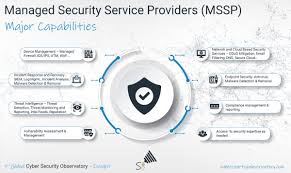
A managed security service provider is a third-party provider that monitors and manages an enterprise’s network devices, systems and applications. They offer 24/7 services designed to reduce the amount of internal operational security personnel an organization needs to hire, train and retain. They also provide access to high-availability security operation centers. According to research firm Forrester, the major players in the MSSP market include Accenture, IBM Security, Dell SecureWorks and Trustwave.
MSSPs handle day-to-day monitoring, interpretation and alerting of important system events throughout the network–including unauthorized behavior, malicious hacks, denial of service attacks and other anomalies. They also perform threat modeling, which involves assessing a network to identify vulnerabilities. An MSP’s goal is to minimize an enterprise’s risk of cyber threats that could jeopardize the confidentiality, integrity and availability of key assets.
An advanced persistent threat is malware that enables attackers to gain unauthorized access into the network and remain undetected for weeks, months or even years until they launch an attack to steal data, compromise the network, gather intelligence or deploy more malware. APT attacks are usually targeted at specific organizations or individuals. These attacks use a combination of attack vectors including phishing, social engineering and exploiting software vulnerabilities. They require a great deal of patience as they probe the target network and try to find weaknesses in its defenses.
How Do Managed Security Services Deal With Advanced Persistent Threats?
The stakes are high for businesses and consumers if an APT attack succeeds. Millions of dollars in lost revenue, repair costs, consumer lawsuits and regulatory penalties are all possible consequences. And for governments and institutions, they can face loss of public trust, civil unrest and mass disruptions in critical services.
Unlike many other third-party IT vendors, MSSPs focus exclusively on cybersecurity. They have a team of skilled professionals including onboarding specialists, security analysts or service delivery experts and engineers, project management and customer support. Many have a security operations center that enables them to monitor and analyze threats around the clock, providing a more comprehensive service than an organization’s internal SOC.
A managed security service provider should also perform continuous vulnerability scanning. This allows them to identify potential risks posed by any area or system within the network that criminals might want to penetrate. This can be an obvious target, such as the workspace or sensitive data, or it can be a little more remote, such as an area that’s a few degrees removed from the actual attack surface. The constant evaluations and preventive actions offered by an MSSP reduce the likelihood that these kinds of threats can impact your business.
One of the core offerings of MSSPs is around-the-clock monitoring of networks, servers, endpoints, and applications. This ensures that any suspicious activity or potential security breaches are detected in real-time, allowing for a quick response to mitigate threats. Security operations centers (SOCs) are typically responsible for performing this function, staffed with security professionals who can monitor logs, conduct threat hunting, and provide alerts for further investigation.