
Stiffener Enhance Heat Dissipation
When designing a printed circuit board (PCB), engineers often opt for a rigid and unbendable structure. However, in certain applications, there is a need to add mechanical support to flexible PCBs. These components are known as stiffeners. They serve multiple purposes, including reinforcing specific sections of a flexible circuit and improving assembly and handling. Stiffeners come in a variety of materials, including polyimide (PI), FR-4, aluminum and stainless steel. Each offers different thermal and mechanical properties. To determine the optimal selection for a particular application, a PCB designer should consider several factors including cost, mechanical stability and manufacturability.
Adding stiffeners to a flexible PCB transforms limited areas of the board into a small segment of a rigid printed circuit board, providing an opportunity to integrate stress points into the design. This allows components and connectors to be reliably mounted to these regions. Without this reinforcement, flexing stresses applied to these interfaces can crack solder joints, delaminate layers and tear conductive traces.
This is particularly common for flex circuits that will be subjected to a range of vibration, compression and temperature fluctuations. To help protect the components and improve the longevity of a flex PCB, a layered stiffener design may be used. This distributes the mechanical stress evenly across the board, ensuring the reliability of the assembly while extending its lifespan.
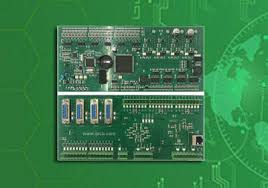
How Can a Stiffener Enhance Heat Dissipation?
A stiffener material’s insulating and thermal properties must be carefully evaluated to ensure it matches the needs of an application. For instance, a PI or FR-4 stiffener will provide excellent thermal resistance for high-temperature environments, while a metal stiffener will offer superior mechanical strength and durability for mission-critical applications.
The thickness of a stiffener is also important to consider. Thicker stiffeners are more effective at absorbing and dissipating heat, but they can interfere with component placement or increase the overall height of the PCB. To avoid these issues, it is essential to optimize the thickness of stiffeners for each application.
In order to save costs during project assembly and allow plated through-hole (PTH) components direct access to the solder pads on a flex circuit, it is sometimes advantageous for manufacturers to add an FR-4 frame to the border of a panelized flex PCB. This allows flex PCBs to be run through automated assembly processes like those of their rigid counterparts. A FR-4 frame can be attached to the flex circuit using heat and pressure, as well as pressure-sensitive adhesives. In addition to allowing the use of a wider range of assembly equipment, this process can also increase the speed of the production cycle by reducing the need for tooling plates.
Various materials are used to create pcb stiffener, with the choice depending on the specific requirements of the application, including the mechanical properties needed, the environment the PCB will operate in, and cost considerations. Some of the most common materials used for PCB stiffeners are: