
flexible printed circuit manufacturers
The arrangement of components on flexible printed circuits (FPCs) is a meticulous process that combines engineering precision with innovative design to maximize functionality and durability. FPCs are utilized in numerous applications, from consumer electronics to automotive systems, owing to their flexibility, lightweight nature, and capability to support complex electronic assemblies. The strategic placement of components on FPCs is critical to their performance, reliability, and manufacturability.
The first step in arranging components on an flexible printed circuit manufacturers involves detailed circuit design and layout planning. Engineers use sophisticated computer-aided design (CAD) software to map out the circuit paths and designate the positions for various components. This planning phase considers the electrical requirements, signal integrity, and mechanical constraints of the FPC. Components must be placed to minimize signal interference and ensure robust electrical connections, which is essential for the proper functioning of the circuit.
One of the key considerations in component arrangement on FPCs is the flexibility and movement the circuit will endure. Unlike rigid PCBs, FPCs can bend, twist, and fold, which necessitates careful placement of components to avoid stress points that could lead to failures. Components are often arranged in such a way that the most critical and sensitive parts are located in areas of minimal flexing, while more robust components can be positioned in regions that experience more movement. This strategic placement helps to prolong the lifespan of the FPC and maintain its performance under varying conditions.
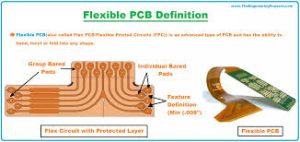
How are components arranged on an flexible printed circuit manufacturers?
Surface Mount Technology (SMT) plays a vital role in the arrangement of components on FPCs. SMT allows for the precise placement of small and lightweight components directly onto the surface of the flexible substrate. Automated pick-and-place machines are used to position components accurately, ensuring consistency and reducing the risk of errors. These machines can handle a wide range of component sizes and shapes, making them ideal for the diverse needs of FPC assemblies. The precision of SMT ensures that components are placed with high accuracy, which is crucial for maintaining the integrity and functionality of the circuit.
The process of applying solder paste to the flexible substrate is also integral to the arrangement of components. Solder paste is typically applied using a stencil to ensure precise and uniform deposition on the designated pads. The flexibility of the FPC substrate requires specialized equipment to maintain flatness during this process, preventing any deformation that could lead to misalignment of components. Proper solder paste application is essential for forming strong solder joints during the reflow soldering process, which secures the components to the FPC.
Another important aspect of component arrangement is the consideration of thermal management. FPCs used in applications with high power demands or significant heat generation must be designed to dissipate heat effectively. Components that generate a lot of heat are often spaced apart to prevent localized hotspots, and thermal vias or heat sinks may be incorporated into the design. This careful planning helps to prevent overheating, which can damage components and degrade the performance of the FPC.
Testing and inspection are critical stages following the arrangement and soldering of components. Automated Optical Inspection (AOI) and X-ray inspection systems are used to verify the correct placement and soldering of components. These systems detect any misalignments, soldering defects, or other issues that could affect the circuit’s performance. Ensuring that all components are correctly placed and securely soldered helps to maintain the reliability and quality of the FPC.
In conclusion, the arrangement of components on flexible printed circuits involves a comprehensive and precise process that takes into account electrical, mechanical, and thermal considerations. Through detailed planning, the use of advanced SMT techniques, and rigorous testing, components are strategically placed to ensure the functionality, durability, and performance of the FPC. This meticulous approach is essential for producing high-quality flexible circuits that meet the demanding requirements of modern electronic applications.