
size of ceramic printed circuit boards
Ceramic PCBs are used in many different electronic devices because of their high-quality performance and durability. They have many advantages over other types of circuit boards, including their ability to handle higher frequencies and their insulating properties. This makes them ideal for heavy-duty applications. When choosing a manufacturer to produce your ceramic printed circuit board, be sure to evaluate the company’s manufacturing capabilities and quality control measures. Look for certifications like ISO 9001, and inquire about their testing and inspection protocols. A reputable company will be able to meet your specifications while maintaining the highest levels of quality and reliability.
The production process for ceramic circuit boards is quite complex, but it produces extremely durable products. First, the ceramic material is combined with glass and organic binders to form LTCC (low-temperature co-fired) material. Then, the conductive materials are applied using screen printing or inkjet technology to create the traces and vias. After these steps, the ceramic substrate is baked between 1600 and 1700 degrees Celsius. After baking, the conductive material will bond with the ceramic surface to create a solid structure. The traces and vias are then filled with the desired metal. Finally, the finished circuit is drilled with the proper apertures and covered with solder mask to protect it.
One of the most common uses for a ceramic printed circuit board is to construct memory integrated circuits. These are primarily used in computers and other electronic devices to store and transmit data. These are usually fabricated on a multilayer ceramic PCB with an aspect ratio of 6:1. The smallest holes that can be laser-drilled into the finished product is 0.25 mm (10 mils).
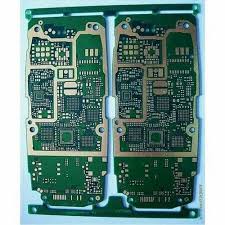
Are there any limitations to the size of ceramic printed circuit boards?
Another important feature of ceramic circuit boards is their thermal conductivity. This allows the circuit board to disperse heat quickly, protecting components from damage. Ceramics also have low thermal expansion, making them ideal for small spaces and tight-fitting devices. In addition, they offer superior dimensional stability and do not degrade at high temperatures.
The thermal conductivity of a ceramic PCB can be enhanced through doping, making it a suitable option for any application. This is especially true for high-speed data transmission, where the low thermal expansion of ceramics is essential to maintaining signal integrity.
While FR-4 is the most popular choice for PCBs, ceramics are often preferred because of their superior performance and insulating properties. They are more durable, more versatile, and have lower power losses than other types of circuit boards. In addition, they have an extremely high thermal conductivity, which helps to transport heat away from hot components. As a result, they can be used in more applications and are more likely to survive harsh environments than other types of PCBs. The thermal conductivity of a ceramic circuit board is more than 20 times greater than that of FR-4. It is also much faster at dispersing heat, which helps to extend the lifespan of electronics and other devices that use them. It is also more resistant to corrosion.