
handle heat dissipation in flexible PCBs
As any PCB designer knows, overheating is a major concern. Excess heat can cause components to fail or even damage the board itself. To prevent this from happening, PCB designers use a variety of techniques to dissipate excess heat. These include adding cooling fans and thermal sinks, as well as strategic component layouts.
Resistors and diodes are common components in flexible pcb that convert electrical current into heat using Ohm’s law. This process produces considerable amounts of heat that must be dissipated in order to keep the circuit functioning properly. Other components that generate heat include capacitors and transistors. In addition, external factors like ambient temperature and environmental conditions can also worsen the thermal issues of a flexible PCB.
The material used to make a flexible circuit board is another factor that influences its ability to manage heat. A flex circuit made with high-quality polyimide can generally withstand temperatures above 150degC for short periods of time. Rigid PCBs, on the other hand, are often limited to operating at temperatures around 260degC.
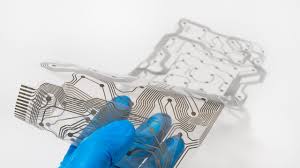
How do you handle heat dissipation in flexible PCBs?
While a flexible PCB can withstand higher temperatures than its rigid counterpart, it’s still a good idea to take measures to minimize excessive heat production. PCB manufacturers can utilize a number of strategies to manage heat in their designs, including incorporating thick copper traces and using thermally conductive adhesives. In addition, they can add internal copper planes and a thermally conductive polyimide substrate to improve the overall thermal conductivity of the board.
For PCBs that must withstand high-current power applications, it’s usually a good idea to incorporate thick and wide copper traces. These wide traces offer a larger surface area for heat distribution and dissipation, which can help reduce the operating temperature of the circuit.
In addition, PCB designers can add thermal vias to the circuit. These are essentially holes in the board that can be filled with a conductive epoxy and capped with copper. This allows them to function as thermal pipes, transferring heat from hot components to cooler areas of the board.
Another way to increase the thermal performance of a flex circuit is to add heat sinks and cooling fans. These devices can add a stream of cool air to the circuit board, thereby dissipating excess heat more quickly and effectively.
PCB manufacturers can also use strategic component placement to enhance the heat dissipation of their flex circuits. They can arrange heat-generating components near each other and spread out their location on the board to reduce thermal hotspots and ensure more even distribution of heat. They can also stagger the heights of the different components to promote proper airflow and avoid stacking, which can lead to higher temperatures in certain areas of the board.
To further improve heat management, a flexible PCB manufacturer can install a temperature sensor and use thermal simulation software to predict and optimize the thermal performance of their design. They can then conduct thermal testing and verification to confirm that the design is performing as intended.